
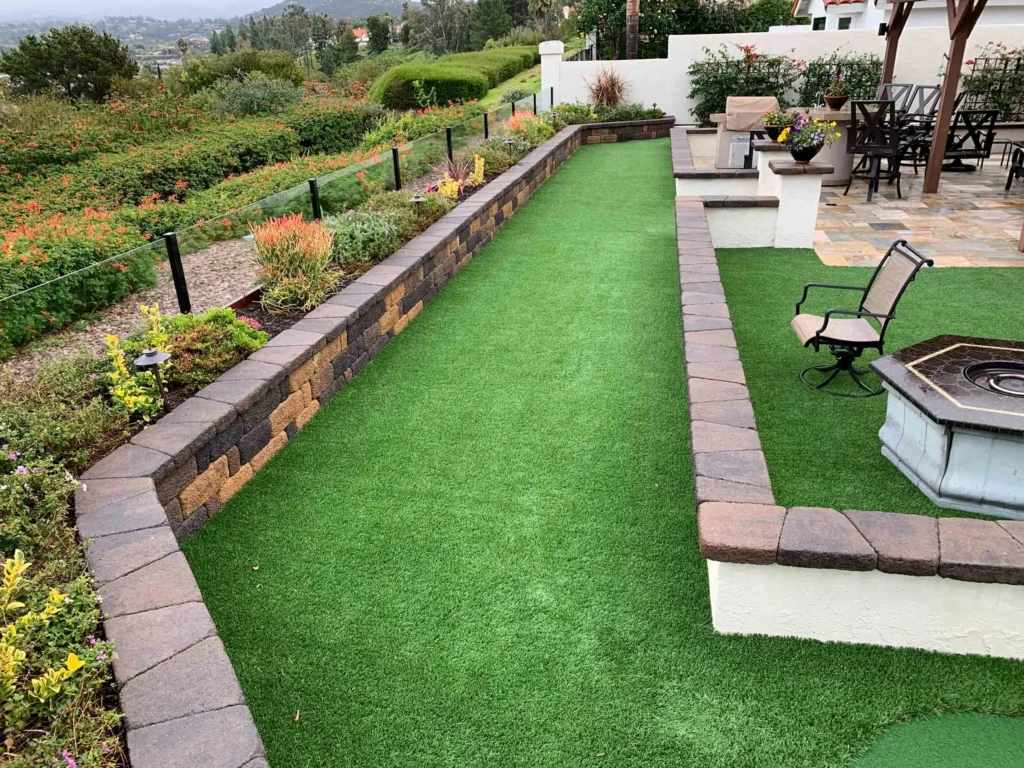
LANDSCAPE TURF INSTALLATION
Professional landscape turf installation in Plano, TX
Elevate your landscape design with our premium turf installation services. We integrate artificial grass seamlessly with your existing landscape elements to create stunning, cohesive outdoor environments.
FEATURES
- -Integration with plants and hardscapes
- -Custom shapes and curves
- -Natural-looking transitions
- -Accent areas and focal points
- -Water feature integration
BENEFITS
- -Cohesive landscape design
- -Complements existing features
- -Professional, polished appearance
- -Low maintenance beauty
- -Versatile design possibilities
Landscape Turf Installation in Plano, TX Create harmonious outdoor environments with professional landscape turf installation that seamlessly integrates synthetic grass into comprehensive landscape designs. Our custom solutions combine the beauty and practicality of artificial turf with complementary hardscape, plantings, and water-wise principles to create stunning, sustainable landscapes throughout Plano. ## Comprehensive Landscape Design Integration Modern landscape design requires thoughtful integration of multiple elements that work together to create functional, beautiful outdoor spaces. Synthetic grass serves as a foundational element that supports and enhances surrounding features. ### Design Philosophy **Holistic Approach**: Landscape turf installation considers the entire property rather than treating turf as an isolated element. **Function First**: Design begins with understanding how spaces will be used, then selects materials and configurations that support those activities. **Aesthetic Cohesion**: All elements—from turf to trees to hardscape—share visual relationships that create unified designs. **Sustainability**: Water-wise principles and low-maintenance choices create environmentally responsible landscapes. ### Integration Principles **Transition Management**: Gradual transitions between turf and other elements create natural, flowing designs. **Scale Relationships**: Turf areas are proportioned appropriately to surrounding features and overall property size. **Color Coordination**: Turf selections complement other landscape colors for harmonious appearance. **Texture Balance**: The soft texture of turf balances hard surfaces and architectural elements. ## Hardscape and Softscape Balance Successful landscapes balance constructed elements with living (or lifelike) components. ### Hardscape Coordination **Patio Integration**: Synthetic grass softens patio edges and creates comfortable transitions between hard entertaining surfaces and landscape areas. **Walkway Framing**: Turf borders along paths define circulation routes while providing visual relief from continuous hardscape. **Retaining Wall Softening**: Turf at wall bases softens structural elements and integrates them into overall design. **Water Feature Surrounds**: Turf provides attractive, clean surfaces around pools, fountains, and ponds. **Outdoor Structure Bases**: Pergolas, gazebos, and shade structures rest on attractive turf surroundings. ### Softscape Enhancement **Tree Well Finishing**: Synthetic grass creates clean, maintenance-free surfaces around tree trunks without damaging roots. **Shrub Border Definition**: Turf edges provide crisp borders that highlight shrub plantings. **Garden Backdrops**: Consistent green turf showcases colorful flower beds and ornamental plantings. **Lawn Substitutes**: Turf areas maintain traditional lawn aesthetics where grass would be difficult to grow. ## Native Plant Combinations with Turf Texas native plants pair beautifully with synthetic grass for regionally appropriate landscapes. ### Native Plant Selection **Drought Tolerance**: Native plants adapted to Texas climate pair with water-saving turf for sustainable landscapes. **Seasonal Interest**: Native wildflowers and perennials provide chng color against consistent turf backgrounds. **Wildlife Support**: Native plantings support pollinators and birds while turf provides clean viewing areas. **Maintenance Reduction**: Both native plants and synthetic turf require minimal maintenance compared to traditional landscapes. ### Design Combinations **Prairie Gardens**: Native grasses and wildflowers combine with turf pathways and gathering areas. **Hill Country Style**: Succulents, cacti, and native shrubs complement turf areas in Mediterranean-inspired designs. **Woodland Edges**: Shade-tolerant native understory plants transition to turf areas in treed landscapes. **Formal Gardens**: Structured native plantings create formal designs with turf parterres and pathways. ## Rock and Mulch Border Designs Textural landscape materials create striking contrasts with synthetic grass. ### Rock Integration **River Rock Beds**: Smooth river stones create naturalistic dry creek beds that contrast with turf surroundings. **Decomposed Granite**: DG pathways provide stable walking surfaces that complement adjacent turf areas. **Boulder Accents**: Large rocks anchor landscape designs and create focal points against turf backgrounds. **Gravel Gardens**: Drought-tolerant plantings in gravel combine with turf gathering spaces. ### Mulch Applications **Organic Borders**: Wood mulch beds frame turf areas with natural edges that enrich soil as they decompose. **Color Coordination**: Dyed mulches in coordinating colors enhance overall design cohesion. **Weed Suppression**: Mulch beds reduce maintenance needs adjacent to turf installations. **Moisture Retention**: Mulch supports nearby plantings while turf handles high-traffic or difficult areas. ## Water Feature Surroundings Water features create dramatic landscape focal points that synthetic grass enhances. ### Pool Integration **Deck Transitions**: Turf creates soft, attractive transitions between pool decks and landscape areas. **Spa Surrounds**: Synthetic grass provides clean, comfortable surfaces around hot tubs and spas. **Waterfall Bases**: Turf surrounds naturalistic water features without the maintenance challenges of natural grass. **Clean Environments**: No grass clippings or mud enter pools from synthetic grass surroundings. ### Fountain and Pond Design **Formal Fountain Settings**: Geometric turf patterns complement classical fountain designs. **Naturalistic Pond Edges**: Turf provides clean viewing areas for koi ponds and water gardens. **Stream Banks**: Synthetic grass stabilizes stream edges while providing attractive viewing positions. **Splash Pad Surrounds**: Family water play areas benefit from turf's drainage and cleanliness. ## Pathway and Stepping Stone Layouts Circulation design integrates turf with walking surfaces. ### Pathway Design **Primary Routes**: Main pathways in stone, pavers, or concrete connect key landscape destinations. **Secondary Paths**: Gravel or mulch paths for less frequent use wind through garden areas. **Turf Paths**: Synthetic grass pathways provide soft walking surfaces that blend seamlessly with lawn areas. **Stepping Stone Courses**: Stone steppers set in turf create informal, naturalistic circulation. ### Stepper Integration **Spacing and Placement**: Proper stepper spacing accommodates comfortable walking rhythms. **Level Setting**: Steppers set flush with turf grade prevent trip hazards and mowing complications. **Material Selection**: Stone types selected to complement overall landscape character. **Pattern Variation**: Different stepper layouts create varying degrees of formality. ## Terraced and Multi-Level Installations Sloped properties benefit from terraced designs that create usable spaces. ### Terrace Design **Level Creation**: Grading and retaining walls create flat areas for turf and other uses. **Elevation Change Management**: Terraces break steep slopes into manageable, attractive levels. **View Optimization**: Strategic terrace placement maximizes views from level lawn areas. **Drainage Integration**: Terrace designs incorporate drainage that prevents water accumulation. ### Retaining Wall Integration **Wall Face Treatment**: Turf at wall tops softens vertical elements and integrates structures. **Stepped Construction**: Multiple low walls create gradual grade changes with turf terraces. **Seating Integration**: Wide wall caps provide seating that overlooks turf areas. **Planting Opportunities**: Terrace levels accommodate varied plantings with turf gathering spaces. ## Mediterranean and Modern Design Styles Landscape styles guide material and layout decisions that include synthetic grass. ### Mediterranean Landscapes **Plano Adaptation**: Mediterranean design principles suit Texas climate and complement turf installations. **Courtyard Concepts**: Central turf areas surrounded by colonnades and plantings create outdoor rooms. **Gravel and Turf**: Decomposed granite pathways contrast with geometric turf parterres. **Container Plantings**: Potted specimens combine with permanent turf areas for flexibility. ### Modern Design **Clean Lines**: Geometric turf shapes complement modern architecture's crisp forms. **Minimal Plantings**: Sparse, sculptural plantings highlight expansive turf areas. **Monochromatic Schemes**: Limited color palettes showcase texture variations between materials. **Architectural Integration**: Turf extends modern architectural forms into the landscape. ## Low-Water Landscape Transformations Water conservation drives many landscape conversions in North Texas. ### Xeriscape Principles **Appropriate Planting**: Native and adapted plants replace thirsty traditional landscaping. **Efficient Irrigation**: Targeted drip irrigation serves plantings while turf eliminates lawn irrigation. **Mulch Application**: Extensive mulching reduces water needs and maintenance. **Practical Turf**: Synthetic grass provides green space where functional needs require lawn areas. ### Conversion Process **Assessment**: Existing landscape evaluation identifies water waste and improvement opportunities. **Design Development**: Water-wise designs incorporate turf strategically for maximum impact. **Phased Implementation**: Large conversions proceed in phases that manage budget and disruption. **Rebate Coordination**: Municipal water conservation rebates may offset conversion costs. ## Seasonal Color Coordination Year-round landscape interest requires planning for seasonal variation. ### Color Strategy **Evergreen Foundation**: Synthetic turf provides constant green foundation regardless of season. **Spring Bulbs**: Daffodils, tulips, and other spring bulbs provide early color against green turf. **Summer Annuals**: Heat-tolerant annuals add vibrant color during peak growing season. **Fall Interest**: Ornamental grasses and fall-blooming perennials complement consistent turf. **Winter Structure**: Evergreen shrubs and ornamental features provide interest when deciduous plants rest. ### Rotational Planting **Annual Rotation**: Chng annual plantings maintain fresh color combinations. **Perennial Development**: Established perennials provide reliable seasonal color with minimal maintenance. **Container Seasonality**: Potted plants offer flexible seasonal color options. **Holiday Enhancements**: Seasonal decorations complement the consistent green backdrop of turf. ## Getting Started with Landscape Turf Creating integrated landscape designs begins with understanding your property's potential and your personal aesthetic preferences. Our landscape design specialists evaluate your space, discuss your vision, and develop comprehensive plans that incorporate synthetic grass as one element within beautiful, functional outdoor environments. From concept through installation, we create landscapes that enhance your lifestyle and property value. Contact us today to schedule your landscape consultation and discover how integrated turf design can transform your outdoor living experience.
FREQUENTLY ASKED QUESTIONS
Can synthetic grass be part of a xeriscape design?
Absolutely. Synthetic grass integrates beautifully with xeriscape principles by providing functional green space without water consumption. Many water-wise designs use turf strategically in high-visibility or high-use areas while surrounding spaces feature native plants, rock gardens, and mulched beds. This approach maximizes water conservation while maintaining traditional landscape aesthetics where desired.
How do you integrate synthetic grass with existing trees and shrubs?
Professional installation works carefully around existing vegetation. For trees, we create appropriate well sizes that accommodate root growth while providing clean turf surrounds. Mature shrubs are protected during installation, and turf is precisely cut to create crisp borders. The consistent green of turf actually enhances the appearance of existing plantings by providing attractive backgrounds.
Can synthetic grass work with stepping stones and pathways?
Yes, synthetic grass integrates beautifully with hardscape pathways. Stepping stones can be set within turf areas for informal paths, or turf can border formal walkways in pavers or concrete. The combination provides design interest and functional circulation while maintaining cohesive landscape aesthetics. Professional installation ensures proper transitions and prevents maintenance issues.
Will synthetic grass look good next to natural plants?
Modern synthetic grass is designed to complement natural landscapes. The consistent green provides beautiful backgrounds that showcase plants, flowers, and garden features. Quality turf is often mistaken for natural grass by casual observers. Professional design ensures appropriate scale relationships and transition zones that create natural-looking integrated landscapes.
How do you handle drainage in landscape turf installations?
Landscape turf installations include comprehensive drainage planning that considers the entire property. The permeable turf backing allows rapid water penetration, while properly prepared bases channel water to appropriate discharge points. Grade design ensures water moves away from structures, and the overall system works with existing drainage patterns. This integrated approach prevents water accumulation while maintaining beautiful, usable surfaces.
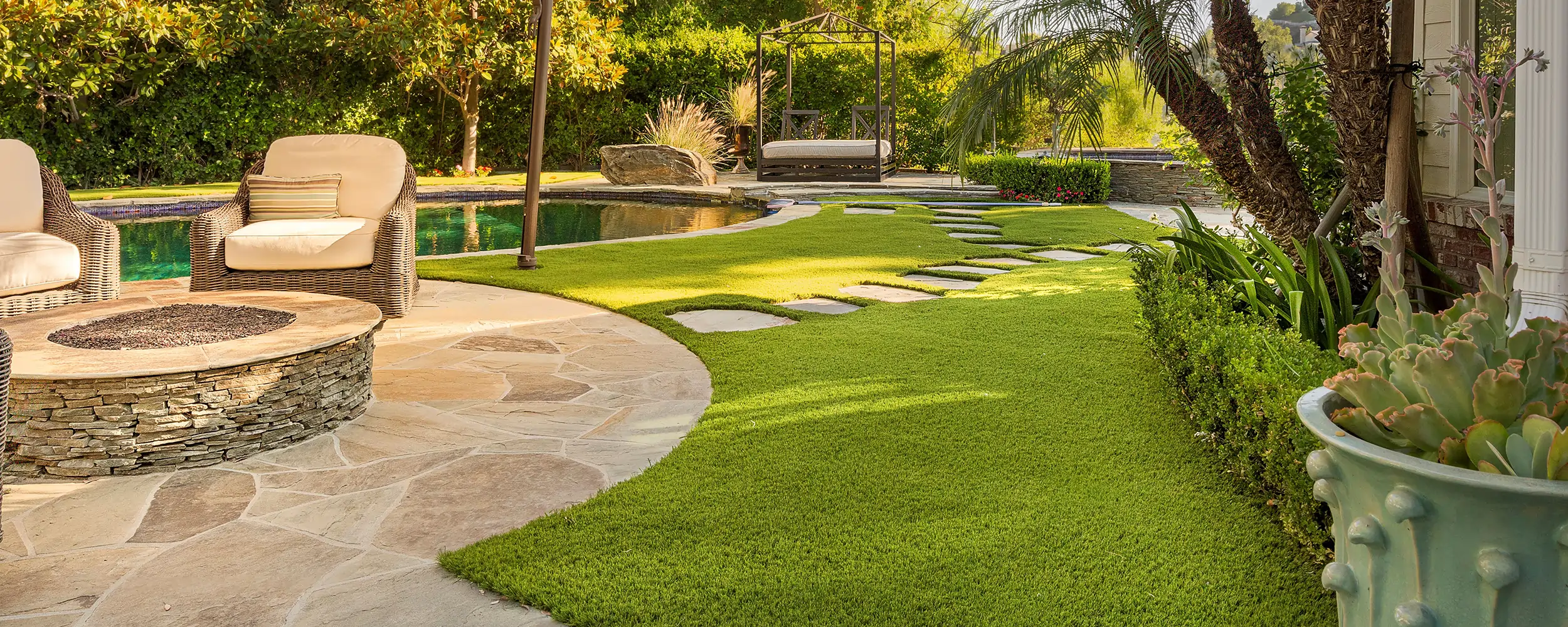
READY TO GET STARTED?
Contact us today for a free consultation and estimate for your landscape turf installation project.
GET A FREE ESTIMATE